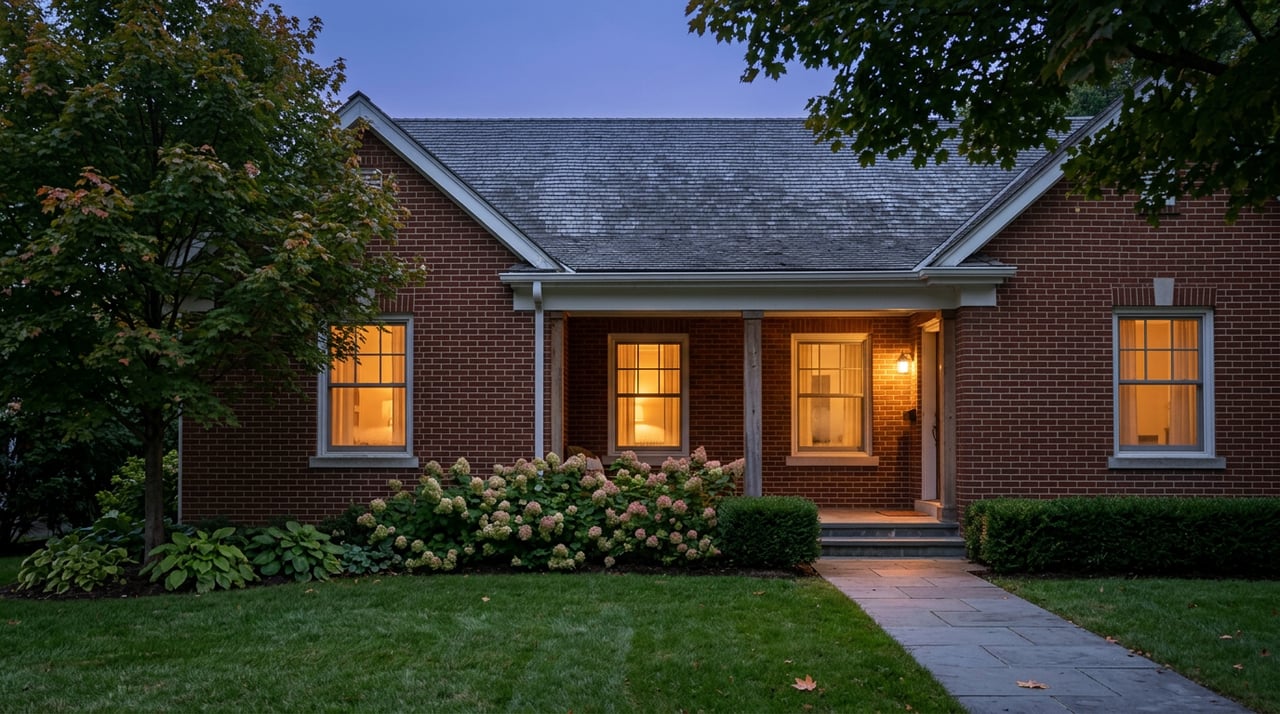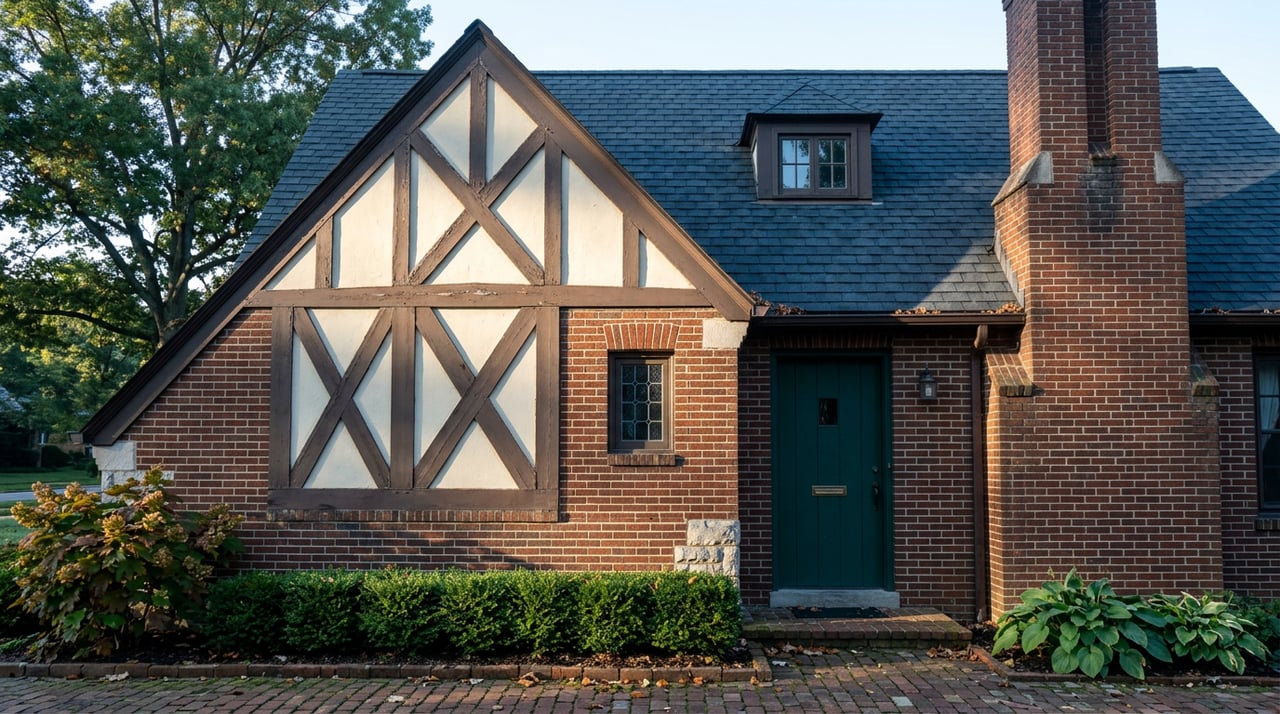
The inspection goes fine. The buyer walks through a Tudor Revival on a brick-lined street, the inspector notes some old wiring in the attic like he notes it in half the homes on the block, and everyone moves toward closing feeling good about the deal. Then, four or five days before the closing date, the insurance agent calls. The carrier that was supposed to write the homeowners policy needs something more than the inspection report. They need a licensed electrician's letter about the knob and tube wiring, and they need it before they will bind coverage, and the lender will not fund without that policy in place.
This is not a story about a bad inspector or an unlucky buyer. It is closer to the default sequence for a meaningful share of Waterbury sales, because Waterbury's housing stock is old in a way most of the rest of the Des Moines metro is not.
Why This Call Comes To Waterbury More Than Elsewhere
Waterbury was built out in three distinct waves: 1906 to 1911, 1923 to 1925, and 1931 to 1940. That means most of the neighborhood's Tudor and Colonial Revival homes, along with its bungalows and Cape Cods, are approaching or have already crossed the century mark. Homes wired in that window were almost universally wired with knob and tube, the copper conductor system that ran through porcelain knobs and ceramic tubes and was standard practice from the 1880s through the 1940s.
Compare that to the rest of the metro. Des Moines-area home inspectors who work across neighborhoods like Beaverdale, Drake, and Windsor Heights report that roughly 78 percent of the city's overall housing stock was built between 1950 and 1980, according to Forever Home Inspection Iowa. Homes from that era mostly have Romex or early aluminum branch wiring, not knob and tube. A buyer shopping in those neighborhoods might never encounter the issue at all. A buyer shopping in Waterbury runs into it as a matter of course.
| Waterbury | Des Moines metro overall | |
|---|---|---|
| Dominant construction era | 1906-1911, 1923-1925, 1931-1940 | About 78% built 1950-1980 |
| Typical original wiring | Knob and tube | Romex or early aluminum branch |
| Insurance underwriting friction | Common | Uncommon |
That gap is the whole story. It is not that Waterbury homes are riskier or less desirable. It is that the neighborhood's defining charm, the century-old brick and the mature trees and the ivy-covered Tudor foundations, comes from a construction era that predates modern electrical systems by design, not by neglect.
What The Home Inspector's Report Actually Settles, And What It Doesn't
A standard Des Moines home inspection will flag knob and tube wiring when it's visible in an unfinished basement or attic. That flag does its job. It tells the buyer the wiring is there and gives both sides a starting point for negotiation.
What it does not do is satisfy an insurance underwriter. Carriers that are willing to write a policy on a home with active knob and tube typically want one of three specific documents: a licensed electrician's letter stating the visible wiring is in good condition and remains active in defined locations, a report confirming the wiring has been de-energized and abandoned in place, or a full electrical evaluation covering the panel, service size, and any modifications made over the decades. A general home inspector's summary paragraph does not check any of those boxes on its own.
The inspection tells you the wiring is old. The insurance underwriter is the one who decides whether that's a problem, and they don't read inspection reports the same way a buyer does.
That distinction matters because it changes who you need to call, and how fast.
The Three Paths An Insurer Actually Offers
Once knob and tube shows up, carriers generally sort a Waterbury property into one of three tracks, and the differences between them are worth understanding before you're the one deciding under a deadline.
- Standard policy with a rewire commitment. A major carrier will write full coverage at normal rates if the buyer or owner agrees to complete a full rewire within a set window, often 30 days from binding. Miss the deadline and the carrier can cancel and notify the lender, which puts the mortgage at risk.
- A stripped-down policy. Some homeowners accept an HO-8 or similar limited policy that covers less than a standard HO-3 while the rewire gets scheduled. It satisfies the lender in the short term but leaves real coverage gaps.
- Specialty carrier at a premium. A smaller number of insurers who focus on older and historic homes will write a standard-style policy on documented, unmodified knob and tube, typically at 50 to 100 percent more than the same home would cost with modern wiring, according to Insure.com's guide to insuring older homes.
None of these paths are disqualifying. All three require the buyer to move faster than the standard closing timeline is built for.
The Iowa Numbers That Make The Timeline Tight
A full rewire commonly runs $8,000 to $20,000 or more, depending on square footage and how much of the original wiring has to come out. Iowa-specific pricing tends to land toward the higher end of that range. A 2026 guide from a Central Iowa electrical contractor points to elevated copper and labor costs and to the age of the state's housing stock itself, which creates more complex access situations behind plaster walls than newer markets face. Plaster walls, common in Waterbury's older homes, take longer to open and patch than drywall does, which pushes both the cost and the calendar further out.
Most Des Moines purchase agreements allow a 7 to 10 day inspection period after an accepted offer. That window is enough time to get an inspection and a first read on the wiring. It is rarely enough time to schedule a licensed electrician's evaluation, get a written rewire quote, and loop in the insurance carrier before the inspection contingency expires. That's the actual friction point. It isn't that knob and tube is unusually dangerous or hard to fix. It's that the paperwork an insurer needs takes longer to produce than the contract gives you to produce it.
How To Handle It On Either Side Of The Table
If you're selling a century-old Waterbury home, the fix is timing, not disclosure. Getting a licensed electrician's evaluation done before you list, rather than waiting for a buyer's inspection to surface the issue, means you're negotiating from a document instead of a deadline. Repair credits for older Des Moines-area homes with real deferred maintenance items commonly run $3,000 to $10,000 or more, well above the $500 to $3,000 range typical for homes in good condition. Knowing your number before an offer comes in changes the conversation.
If you're buying, the moves are straightforward once you know to make them:
- Ask your agent whether the home's basement or attic shows visible knob and tube before you write the inspection contingency around a standard timeline.
- Call your insurance agent the same day the inspection report lands, not after you've already scheduled closing.
- Get a written rewire quote from a licensed electrician, and ask specifically what it does and doesn't include. Most quotes cover the electrical work alone, not opening and patching plaster.
- Decide before you're under pressure whether you'd rather negotiate a credit, a price adjustment, or ask the seller to complete part of the rewire before closing.
None of this is a reason to avoid a Waterbury home. It's a reason to build your contract timeline around what the neighborhood's age actually requires.
A Few Common Questions
Does every Waterbury home still have knob and tube wiring? No. Many have been partially or fully rewired over the decades, and a home inspector or electrician can tell you what's actually live versus what's been abandoned in place. The point is that the odds of encountering it are meaningfully higher here than in Des Moines neighborhoods built after 1950.
Will my lender require the rewire before closing? That depends on the lender and the insurer, not a blanket rule. What's consistent is that the lender needs a bound homeowners policy to fund, and the insurer needs its own documentation before it will bind. That sequencing is what creates the time pressure.
Is a credit or a price reduction the better move? It depends on what you want control over. A credit at closing lets you choose your own electrician and manage the work on your own timeline after you own the home. A price reduction assumes you'll handle it yourself with no strings attached either way. Either can work. The wrong move is agreeing to a carrier's rewire deadline you haven't actually budgeted for.
If you're weighing a Waterbury home, or you're getting ready to list one and want to know your number before a buyer's inspection sets it for you, Martha Miller Johnson has walked this exact sequence with Des Moines buyers and sellers before. Let's Connect and talk through the timeline while you still have room to plan it.