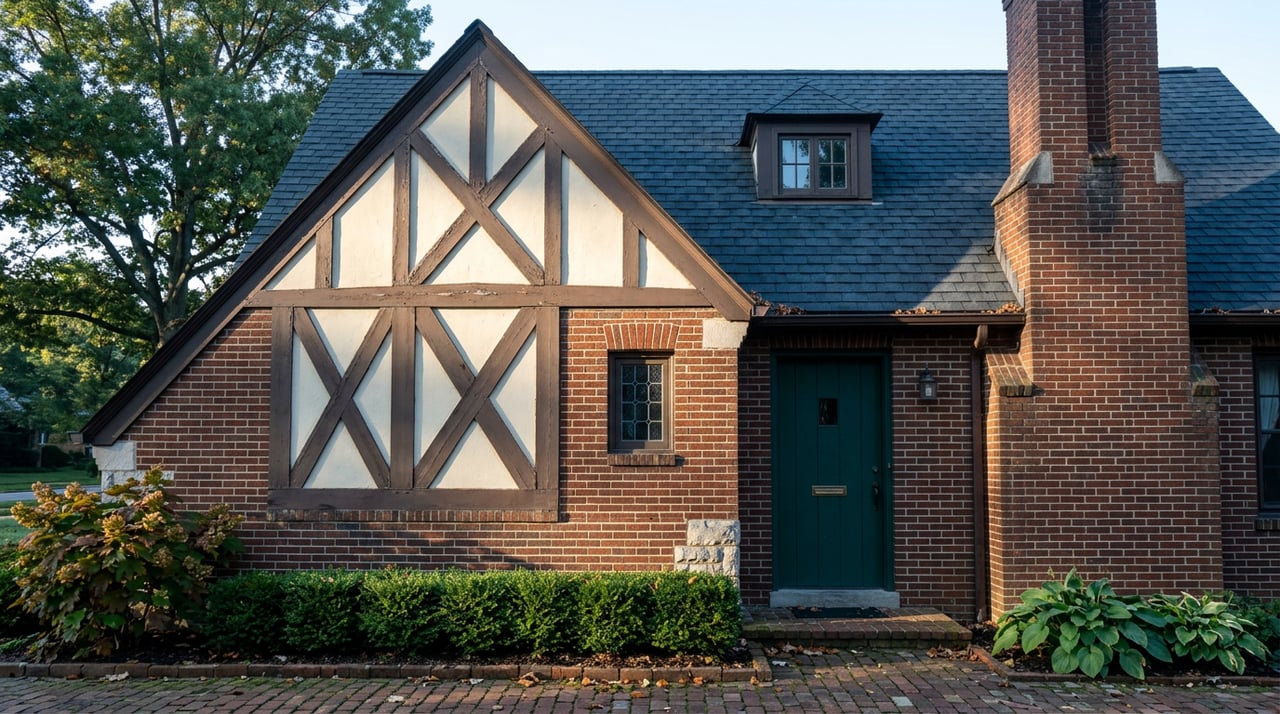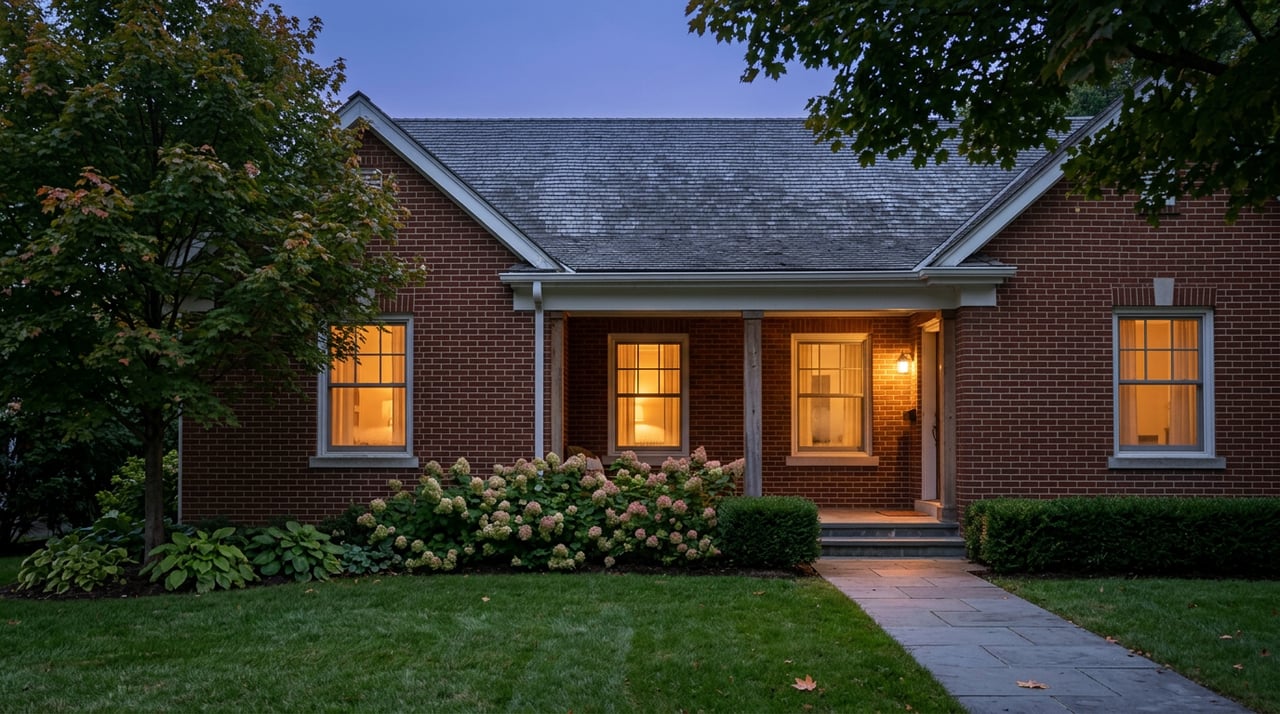
Ask what a given price point buys in Waterbury and the honest answer depends on which stretch of Ingersoll Avenue you're standing on. A few blocks in one direction, that number buys a share of a hundred-year-old brick Colonial Revival with original trim and a chimney older than anyone currently living in the house. A few blocks the other way, the same number might land you in a newly built townhome with attached parking and an HOA that mows the lawn. Both sales get folded into the same "Waterbury median" that shows up on every portal search, and that's where buyers comparing neighborhoods start making decisions off a number that's quietly averaging two different products.
This isn't a story about Waterbury losing its character. It's a story about what happens to a median price when a new housing type shows up inside a neighborhood that was built out in a completely different era, and why that matters more to a comparison-shopping buyer than the headline number itself.
A Neighborhood Built Around One Builder's Vision, Then Left Alone For Decades
Waterbury's housing stock reads consistent because it mostly is. According to the Waterbury Neighborhood Association's own history, much of North Waterbury Road and Waterbury Circle was built almost entirely by one contractor, Edwin Beck, whose homes still carry matching chimney and shutter motifs that Beck himself considered his most significant residential accomplishment in Des Moines. The surrounding area took its shape in the same era, when the Golf and Country Club was established in 1897 on 60 acres south of Waveland Park, giving the neighborhood what WNA's history calls an aura of prestige and exclusiveness. By 1930, residents were organized enough to successfully fight a plan to extend Ingersoll Avenue straight through Waterbury Circle to connect to what's now Ashworth Road, a fight that helps explain why the street pattern still reads as a single, deliberate design rather than a patchwork.
For nearly a century, that was the whole story. If you wanted a house in Waterbury, you wanted one of those houses, with everything that comes with owning something built before central air was standard: original hardwood, a layout that predates open-concept living, and a maintenance list that grows with the decades.
Then Platinum Development Broke Ground On Ingersoll
The newest addition to that stock isn't a renovated bungalow. It's The Woods at Waterbury, a townhome community at 4848 Ingersoll Avenue built by Platinum Development. Phase 1 is complete and Phase 2 is underway, which means Waterbury now has an attached, HOA-governed, new-construction product sitting inside a neighborhood that was, until recently, defined entirely by detached, single-family homes.
That's not a small architectural footnote. It's a second product line inside one zip code, and it behaves nothing like the first. New construction carries different maintenance obligations, different monthly costs once you add an HOA fee, and a different depreciation curve than a house that's already stood for a century. When a buyer sees "Waterbury" on a listing, they're no longer guaranteed which of these two products they're looking at.
What The Existing Housing Stock Already Shows You
Even before new construction entered the picture, Waterbury's older homes didn't price uniformly, and recent closed sales make that obvious.
| Address | Built | Square Feet | Sold | Price/Sq Ft | Days on Market |
|---|---|---|---|---|---|
| 5723 Waterbury Cir | 1925 | 3,014 | Feb 12, 2026 | $307 | 110 |
| 5708 Waterbury Rd | 1932 | 2,085 | Jun 1, 2026 | $261 | 46 |
| 650 48th St | 1918 | 2,403 | Aug 22, 2025 | $281 | 19 |
| 6420 Center St | 1944 | 1,230 | Jan 8, 2026 | $209 | 178 |
Look at the spread. Price per square foot ranges from $209 to $307 among homes built within a 26-year window of each other, and days on market swings from 19 to 178. The 5723 Waterbury Circle sale closed 23 percent below its original list price after nearly four months on the market, which tells you that even within the historic stock, condition and pricing strategy separate a fast sale from a stale one. The 1918 home on 48th Street sold in 19 days. The 1925 home on Waterbury Circle sat for nearly six times as long before it found a buyer.
That variance existed before anyone poured a foundation on Ingersoll. Add a new-construction townhome tier into the mix, and the "Waterbury price" a buyer sees on a portal search is now averaging three or four genuinely different buying decisions into one misleading number.
Why Two Portals Don't Even Agree On The Median
This split shows up in the aggregate numbers too, and the disagreement itself is useful information. One major portal's July 2026 figures put Waterbury's median asking price at $337,000, with a median price per square foot of $241 and a median time on market of 29 days. Another portal's closed-sale tracking, current as of this writing in early August 2026, puts the median sale price closer to $446,875, with an average time on market of 54 days.
Those aren't two measurements of the same thing gone slightly wrong. One is asking price for whatever happens to be listed at that moment, which can lean toward smaller or lower-tier homes if that's what's currently on the market. The other is closed-sale price across a trailing window, which captures the higher end of what actually sold, estate-level renovations included. Neither number is wrong. Both are incomplete on their own, and neither one tells you whether the transaction behind it was a century-old fixer, a fully restored showpiece, or a new-construction townhome with a homeowners association fee attached.
The Comp Problem This Creates At The Table
Here's where this stops being trivia and starts being a transaction issue. When a neighborhood has one dominant housing type, appraisers and buyers both have an easy comp set to work from. Waterbury doesn't have that luxury anymore. An appraiser pulling comps for a detached 1932 Cape Cod shouldn't be leaning on a recently closed Woods at Waterbury townhome sale, and a buyer trying to gauge whether a new-construction unit is priced fairly shouldn't be anchoring to what a fully renovated century-old estate sold for down the street.
This matters most at two points in a deal: when a buyer is deciding what to offer, and when a lender's appraisal comes back. If the comps used to support a price don't match the product type, you get pushback, renegotiation, or a longer path to closing than either side expected. A buyer who understands that Waterbury now contains two comp pools walks into a negotiation with a real advantage over one who's just looking at the zip code's median and assuming it applies evenly.
How To Actually Compare If You're Choosing Between Old And New Here
If Waterbury is on your shortlist, the median price isn't the useful number. What's useful is knowing which product you're pricing:
- Ask directly whether a listing is part of the historic stock or the Woods at Waterbury development, and if it's new construction, ask which phase and what the HOA covers.
- Compare price per square foot only within the same product type. A $261-per-square-foot 1932 home and a new-construction townhome at a similar price point are not the same purchase, even if the number looks close.
- Weigh the maintenance math over a five- to ten-year horizon, not just the purchase price. A century-old home with original systems will need capital work a new build won't, but a new build carries an HOA fee that a detached historic home doesn't.
- If you're the one selling a historic home nearby, be ready for buyers to ask how your pricing compares to both the older comps and the new construction, since both are now visible to anyone house hunting in the area.
None of this means one option is better than the other. It means the two options need to be evaluated on their own terms instead of being blended into a single number that doesn't describe either one accurately.
A Few Common Questions
Is new construction pulling Waterbury's median price up or down? It depends on which portal's median you're looking at and what's currently listed. Since new-construction townhomes and century-old detached homes price differently per square foot and carry different ongoing costs, a rising or falling median doesn't tell you which segment moved. Look at recent sales within the specific product type you're considering instead.
Does buying in a historic neighborhood with new construction nearby affect resale value? It can work in either direction depending on the property. What matters more than the mix itself is making sure any comps used for pricing or appraisal match your home's actual type, age, and condition rather than a blended neighborhood average.
Are the historic homes and the new townhomes zoned or governed the same way? The historic homes are standard detached single-family properties. The Woods at Waterbury operates under its own homeowners association with its own rules and dues, separate from anything governing the surrounding blocks. If you're comparing the two, factor the HOA terms into your total cost comparison, not just the sale price.
If you're trying to figure out which side of this comparison actually fits how you want to live and what you're willing to maintain, that's exactly the kind of conversation worth having before you start touring. Martha Miller Johnson has spent years reading Waterbury block by block, old stock and new, and can walk you through what a specific listing's price actually reflects before you make an offer based on a number that might not apply to it. Let's Connect.