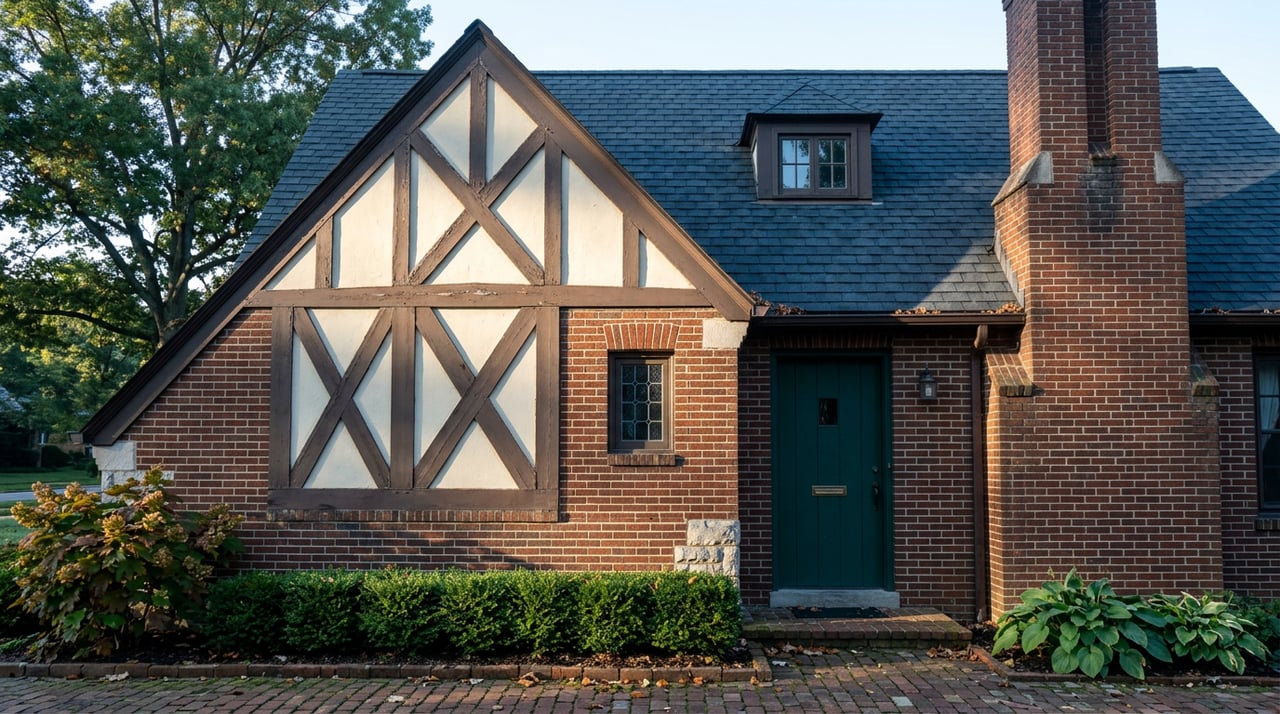
Waterbury sells itself on age. The brick sidewalks, the Tudor gables, the Colonial Revivals that have been standing since before the streetcar line ran down Grand Avenue. Every listing description leans on it: century-old character, original hardwood, a neighborhood that has outlived three generations of owners. That pitch has always worked in this market.
As of January 1, 2026, that same pitch puts a Waterbury seller directly inside the group Iowa's disclosure law is now asking the hardest question about.
The Seller Property Condition Disclosure, the form every Iowa seller of one to four residential units has to complete under state law, added a new field this year: does this property have a lead service line. Sellers answer yes, no, or unknown. It sounds like a small addition to a document that already runs several pages. For a neighborhood built almost entirely before the mid-1980s cutoff that determines lead-line risk, it is not small. It is a question aimed squarely at the housing stock that makes Waterbury Waterbury.
The Question That Wasn't There a Year Ago
A lead service line is the pipe running from the water main to a home's interior plumbing. It counts if it's pure lead, and it also counts if it's a galvanized line that was ever downstream of a lead pipe, which is a detail a lot of homeowners have never had reason to check. Homes built before the mid-1980s carry the highest risk, and that describes the overwhelming majority of Waterbury's housing, where Tudor Revivals with stone foundations sit across the street from bungalows and Cape Cods dating to the early and mid-20th century.
For sellers, the practical effect is that a form field most people would have skimmed past two years ago now requires an actual answer, and "I've never thought about it" is not one of the three options on the form.
Why "I Don't Know" Isn't the Out It Sounds Like
Iowa's disclosure standard is built around what a buyer would consider significant, not what a seller happens to remember. If a fact would reasonably change a buyer's decision to purchase or the price they'd offer, it's material, and material facts have to be disclosed. That standard is broader than most sellers expect walking into the process.
This is where "unknown" actually functions as intended. Checking unknown is a legitimate, honest answer when you genuinely have not had the service line inspected. What creates exposure is guessing yes or no without having verified it, or leaving a field blank because the question feels unfamiliar. Under Iowa Code Chapter 558A, a buyer who later discovers an undisclosed material problem has real recourse: repair costs, attorney fees, and in some situations the ability to challenge the sale itself. None of that requires the seller to have acted in bad faith. It only requires that the disclosure turn out to be wrong.
For a Waterbury seller, the honest path is usually the simple one. If you don't know the material of your service line, the form gives you room to say so. What it doesn't give you room to do is skip the question or answer it based on a guess.
What the City's Own Numbers Say About the Stakes
Des Moines is not treating this as a paperwork exercise. The city is in the middle of replacing an estimated 97,650 lead water service lines across its older neighborhoods, at a cost of roughly $10,000 to $12,000 per property when a line does need to come out. That figure covers the entire city, not Waterbury specifically, and there's no public count of how many of those lines sit under Waterbury streets. But the number exists at all because Des Moines has a lot of housing stock built exactly like Waterbury's: older, brick-lined, put in the ground before anyone was thinking about what pipe material would mean sixty years later.
That citywide program is the backdrop the new disclosure question sits against. It's the reason the state added the field to the form in the first place, and it's why a buyer's agent working with a Waterbury listing this year is more likely than ever to ask about it directly.
How to Actually Answer the Question
The good news is that finding out isn't complicated. A few practical steps get a seller to an honest answer well before a buyer's agent asks:
- Ask a licensed plumber to identify the service line material during a routine visit. It's a quick visual check where the line enters the home, typically in the basement or crawl space.
- If the home has had any water service work done, pull whatever paperwork exists from that project. Past repairs sometimes note the material that was there.
- If none of that turns anything up, mark the disclosure honestly as unknown. That's what the option is for.
None of this is legal advice, and a seller with real questions about liability should talk it through with an attorney or their agent before signing anything. But the underlying task is not complicated. It's a phone call, not a renovation.
The Rest of the Pre-Listing List for a 100-Year-Old House
The lead line question rarely shows up alone. Century-old homes in this part of Des Moines tend to raise a cluster of related items during inspection, and a seller who gets ahead of them keeps more control over the negotiation than one who finds out for the first time after an offer is already on the table.
A standard home inspection in the Des Moines area typically runs $350 to $550 depending on the size and age of the home. For anything approaching Waterbury's typical vintage, a sewer scope is worth adding on top of that. Original cast iron and clay drain lines don't announce themselves until they back up, and a camera inspection ahead of listing gives a seller the chance to address a problem on their own terms instead of a buyer's. Radon testing belongs on that same list. It has nothing to do with a home's age, but Iowa's radon levels run high enough statewide that skipping it is rarely worth the risk either way.
None of this means every Waterbury seller is sitting on a lead line, a failing sewer lateral, and a radon problem all at once. Most aren't. It means that a home built in the 1910s or 1920s carries a specific set of questions that a 1998 build in a newer subdivision simply doesn't, and the disclosure form updated this year is the state's way of making sure those questions get asked before closing rather than after.
The Charm Doesn't Change. The Paperwork Around It Does
None of this is a reason to see Waterbury's age as a liability. The brick streets and the hundred-year-old floor plans are still the reason buyers seek this neighborhood out, and that hasn't shifted. What's shifted is the amount of homework a seller needs to do before listing, and how directly the state's paperwork now points at exactly the features that make these homes worth buying in the first place.
Getting ahead of the lead line question, along with the sewer scope and radon check that tend to travel with it, means walking into a listing appointment with answers instead of guesses. That's the difference between a disclosure form that protects a seller and one that quietly becomes a problem eighteen months after closing.
If you're weighing a sale of a Waterbury home this year and want to talk through what the new disclosure requirement actually means for your specific property, Martha Miller Johnson has spent years walking Waterbury sellers through exactly this kind of pre-listing groundwork. Let's Connect before you fill out the form, not after.
A Few Common Questions
Does Iowa require me to replace a lead service line before I can sell my home? No. The current disclosure requirement asks sellers to state whether a lead service line is present, not to remediate it before a sale. Whether replacement makes sense before or after listing is a conversation worth having with your agent based on your specific situation.
What if I've owned my home for decades and have no idea what my service line is made of? Mark the disclosure as unknown if that's genuinely the case. The form is built to accommodate that answer. A quick check by a licensed plumber can often resolve the uncertainty before you even get to the paperwork.